When sourcing or customizing planetary gearboxes for precision micro drives, medical devices, robotic joints and heavy industrial machinery, design engineers frequently raise one critical question: do small and large planet gears bring distinct performance differences within a planetary reduction unit? Many equipment buyers hold a common misconception that adjusting planet gear dimensions will change the gearbox speed reduction ratio, while overlooking how gear size reshapes load resistance, running smoothness, service life and overall equipment layout.
As a trusted global manufacturer of custom planetary gear motors with decades of dedicated research and development, I.CH Motion delivers tailored planetary transmission solutions to partners across more than 50 countries. Our product portfolio spans ultra-compact micro gear units for lightweight precision equipment and heavy-duty planetary reducers for high-load industrial operations. This article clarifies all practical performance gaps between small and large planet gears, sorts out prevalent design misunderstandings, and pairs different gear sizes with their matching application scenarios. A dedicated FAQ segment is included at the end to resolve common client doubts quickly, without overly complex technical formulas or rigid numerical parameters.
Key Basic Fact: Planet Gear Size Never Alters Gear Reduction Ratio
First, it is essential to correct the most widespread misunderstanding of planetary transmission design. The final reduction ratio of a standard planetary gearbox is determined solely by two core internal components: the central sun gear and the outer internal ring gear. The size of intermediate planet gears only serves to complete internal assembly matching and structural layout, and will not impact output speed or torque amplification levels in any way.
This core design rule creates flexible customization space for manufacturers. While retaining the exact same speed reduction effect, we can adopt two entirely different structural layouts: gearboxes fitted with compact small planet gears for space-sensitive equipment, and units equipped with enlarged planet gears built for heavy-duty operation. All performance distinctions discussed below stem purely from the structural differences brought by varying planet gear dimensions, rather than changes to transmission speed ratios.
Practical Performance Gaps Between Small and Large Planet Gears
1. Load Bearing Capacity and Operational Durability
Large-Sized Planet Gears
Planet gears with bigger physical sizes feature thicker, sturdier tooth structures that deliver outstanding resistance against heavy loads and sudden impact force. During long-hour continuous operation or periodic shock load conditions, robust gear teeth effectively avoid surface wear, local damage and fracture risks, greatly improving the gearbox's reliable load capacity.
The primary trade-off of large planet gear configurations lies in overall equipment size and weight. Larger internal gear components expand the radial outline of the whole gearbox, which raises raw material consumption and production costs accordingly. Such designs are widely favored for heavy-duty working environments where stable high-torque output and long service life are top priorities.
Small-Sized Planet Gears
Miniature planet gears adopt slim, lightweight tooth structures to shrink the overall footprint of the planetary gearbox, making them the ideal pick for equipment with strict space limitations. However, their thin gear tooth structure limits maximum load tolerance. Under sustained heavy load or frequent impact, gear surfaces tend to wear prematurely, which shortens the usable lifespan of the whole transmission system.
This lightweight structural advantage makes small planet gear planetary motors irreplaceable for portable, compact precision equipment that only operates under mild, stable light loads with minimal impact force.
2. Running Smoothness, Noise Level and Long-Term Service Life
The contact area between meshing gear teeth directly decides how stably a planetary gearbox runs. Gearboxes built with large planet gears feature wider contact surfaces during operation, distributing operating pressure evenly across all meshing points. Uniform pressure distribution cuts down internal friction during rotation, delivering higher overall transmission efficiency. Meanwhile, balanced stress effectively suppresses vibration, resulting in quieter running performance and slower component aging, which extends the gearbox's service cycle significantly.
By contrast, small planet gears have narrow meshing contact zones that concentrate operating pressure on limited tooth surfaces. Concentrated pressure creates extra internal friction during rotation, lowers transmission smoothness and generates more noticeable running noise. Long-term continuous operation will accelerate gear surface aging and wear, requiring more frequent maintenance or part replacement compared to large planet gear alternatives under identical operating conditions.
3. Rotation Speed Limits and Supporting Structural Matching
Planet gear size dictates the specification of supporting bearings installed inside the gearbox, forming a clear trade-off between maximum rotation speed and load resistance.
Small planet gears pair with compact miniature bearings that allow the gearbox to sustain higher input rotation speeds. This characteristic fits high-speed precision micro transmission equipment with low load demand perfectly.
Larger planet gears need thicker, more robust bearings to withstand heavy radial pressure brought by high torque output. While these heavy-duty bearings offer exceptional load resistance, their solid structure increases rotation resistance and sets a lower ceiling for maximum input speed, suiting low-speed, high-torque operating demands only.
4. Overall Layout, Equipment Integration and Production Cost
Gearboxes equipped with large planet gears require thicker housing structures and more raw metal materials, pushing up total manufacturing costs. Their bulky outer dimensions also create obstacles for integration into miniaturized equipment with tight installation cavities.
Small planet gear planetary units cut material usage and simplify production processes, controlling overall manufacturing costs effectively. Their slim, compact body integrates seamlessly into tiny precision devices, making them cost-efficient for mass-produced light-load equipment.
Matching Application Scenarios for Different Planet Gear Sizes
Planetary Gearboxes with Large Planet Gears
These heavy-duty transmission units prioritize load resistance, stable output and long service life, suitable for all high-torque, high-impact industrial applications:
Construction machinery driving parts, wind power regulating actuators
Heavy automated production line clamping and lifting mechanisms
Large logistics transport vehicles, industrial robot heavy-load joints
I.CH Motion provides customized multi-stage large planet planetary reducers matched with brushless and servo drive motors for these industries. All products pass international safety and quality certifications to ensure stable performance under harsh working environments.
Micro Planetary Gear Motors with Small Planet Gears
Built for compact installation space and mild light-load operation, these tiny drive units serve precision miniature equipment sectors:
Minimally invasive medical instruments and portable diagnostic devices
Small educational robots, smart lock driving components, miniature camera rotation modules
Portable testing equipment, precision fluid control transmission parts
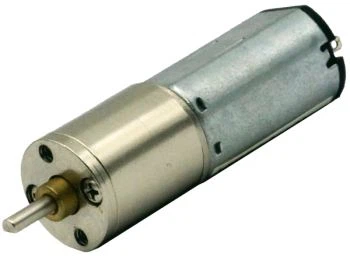
Our classic micro series planetary gear motors adopt small planet gear structures, supporting flexible customization of voltage, output shaft style and encoder accessories to meet diverse lightweight precision equipment demands.
FAQ Section: Planet Gear Size and Planetary Gearbox Performance
Q1: Can we swap small planet gears for larger ones while keeping the same reduction speed?
A1: Theoretically, the reduction ratio will stay unchanged, yet internal gear assembly follows fixed matching rules. Random gear size replacement without professional structural calculation will cause assembly failure. Our professional engineering team offers free structural parameter matching support for all customized gearbox orders to avoid assembly errors.
Q2: Will larger planet gears deliver stronger output torque directly?
A2: No. The core factor determining output torque is motor power and gearbox stage count. Larger planet gears only strengthen the gearbox's ability to bear torque without boosting torque output magnitude itself. If higher driving torque is required, adjusting motor power or adding reduction stages is the correct solution.
Q3: Which planet gear size suits silent medical precision equipment?
A3: The choice depends on your equipment's core priority. If installation space is extremely limited and load demand stays low, small planet gear units are the better fit. If low noise and long continuous stable operation are the primary requirements, medium and large planet gear structures perform better, as wider meshing surfaces reduce vibration and running noise effectively to meet medical equipment comfort standards.
Q4: What are the main restrictions when adopting ultra-small planet gears for micro motors?
A4: Two core practical limitations exist. First, thin gear tooth structures cannot sustain heavy or impact loads. Second, matched miniature bearings have weaker heat dissipation performance, so sustained high-speed operation should be avoided to prevent overheating damage. I.CH Motion optimizes special alloy gear materials for micro series products to ease these drawbacks as much as possible.
Q5: Does I.CH Motion support custom planet gear size for private-label gear motor orders?
A5: Absolutely. We provide full ODM and OEM customization covering planet gear size, gear surface treatment, output shaft design, voltage configuration and encoder integration. Equipped with independent precision gear processing workshops and mature proprietary transmission technology, we deliver personalized planetary gear motor solutions for global partners and support stable long-term cooperative production.
Planet gear size has no influence on a planetary gearbox's reduction ratio, yet it shapes nearly every core practical performance indicator, including load capacity, running quietness, service life, speed range, overall dimension and total cost. There is no one-size-fits-all optimal planet gear size; designers must balance equipment load demand, installation space constraints, noise standards and budget targets to select the most appropriate transmission structure.
Founded as a professional planetary gear motor manufacturer with years of industry experience, I.CH Motion integrates independent gearbox research, precision gear processing and full motor assembly under one roof. We offer fast 24-hour inquiry replies and round-the-clock professional technical support for all custom orders, maintaining a stable high product qualification rate. Whether you need ultra-compact micro gear motors with small planet gears for medical precision equipment or heavy-duty planetary reducers with large planet gears for industrial automation, send your equipment's working requirements and installation specifications to our official email for a free tailored transmission design proposal.