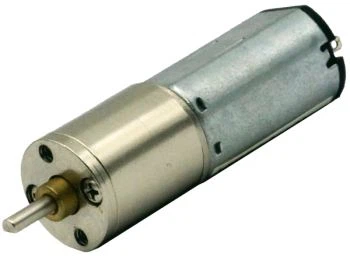
When sourcing a reliable high torque gearbox for industrial automation, smart home devices, power tools, robotics or precision medical equipment, one of the most frequently raised technical questions by engineers and procurement buyers is clear-cut: Does installing a larger quantity of gears inside a gearbox consistently deliver superior overall performance? Numerous purchasers hold the misconception that extra gears and additional transmission stages will automatically generate larger torque, smoother running motion and extended service lifespan. This flawed judgment often results in inappropriate geared motor selection, declined working efficiency, amplified operating noise, expanded installation dimensions and unnecessary procurement and maintenance expenses.
Professional transmission manufacturers with decades of R&D and production experience clarify the actual relationship between gear quantity, stage layout and practical running performance, guiding global buyers to select a properly matched high torque gearbox tailored to unique application requirements.
Common Questions About Gear Quantity & High Torque Gearbox Performance
Q1: Will adding more gears inside a high torque gearbox bring higher torque output?
A1: Not necessarily. Torque amplification relies on precise gear ratio distribution and structural design instead of blind gear stacking. A reasonably designed single or two-stage gear set can already realize strong torque output. Excess gears only multiply meshing friction losses and waste input power, failing to lift effective usable torque and even lowering actual output torque in severe cases.
Q2: What downsides will excessive gears bring to a high torque gearbox?
A2: Multiple obvious defects will occur. First, cumulative energy loss reduces transmission efficiency notably, shortening battery life for wireless devices. Second, extra meshing pairs increase vibration, backlash and running noise, failing low-noise application demands. Third, more gears occupy extra internal space, making the gearbox bulky and heavy, which violates miniaturization layout requirements for compact devices. Besides, more components raise assembly difficulty, failure risk and overall manufacturing cost.
Q3: Is it never allowed to increase gear numbers and transmission stages?
A3: Moderate stage upgrading is necessary for ultra-high reduction ratio scenarios. When the required reduction ratio exceeds 1:500, a single-stage gear structure will face gear undercutting and excessive tooth stress. Splitting the total ratio into 2–3 stages with a proper number of gears can achieve high torque while controlling efficiency loss, noise and volume within acceptable ranges.
Q4: How to choose between planetary gearbox and spur gearbox in terms of reasonable gear quantity arrangement?
A4: A planetary gearbox adopts multiple planet gears for shared load bearing, delivering high torque density with fewer gears and compact size, ideal for high-precision, space-limited high-torque scenarios like robot joints and medical devices. The spur gearbox features a simple parallel-axis structure with low cost; its transmission stages are strictly arranged according to specific ratio needs, avoiding redundant gears for conventional low-to-medium torque transmission tasks.
Q5: What reduction ratio range fits single-stage gear structure with fewer gears?
A5: Reduction ratios below 1:100 are perfectly compatible with single-stage spur gearboxes or planetary gearboxes with small gear counts. Such configurations maintain high efficiency, low noise and competitive cost, the most cost-effective choice for most standard automation equipment.
To start with, it is necessary to review the operating principle of a standard high torque gearbox. Common reducer types, including planetary gearboxes and parallel-axis spur gearboxes, rely on gear ratio conversion to convert the high-speed, low-torque power output of brushed DC motors, brushless DC motors, AC motors and servo motors into low-speed, high-torque driving force. Torque amplification depends on precise dimension matching and reasonable ratio distribution among gear sets, rather than simply stacking more gear components arbitrarily. Each gear meshing point creates friction loss and energy dissipation; the more gears and transmission stages incorporated, the higher accumulated power loss occurs, directly dragging down the overall transmission efficiency of the high torque gearbox. For battery-operated devices such as portable power tools and wireless intelligent actuators, lowered efficiency shortens continuous working time and raises long-term operating costs, which cannot be overlooked in product design.
Leading micro transmission solution suppliers own dozens of independent patents covering gearbox structural design and precision processing. Advanced CNC gear hobbing equipment and full-automatic gear performance inspection centers are deployed to machine every gear component strictly complying with ISO9001, RoHS, CE and UL certification specifications. Complete product portfolios contain diversified series ranging from 12mm micro geared motors, parallel-axis spur gear reducers to high-performance planetary gearboxes, supporting multiple standard rated voltages including 2.4V, 3V, 6V, 12V and 24V. Flexible customized services are also available, covering adjustable output torque, multiple output shaft styles such as D-shaft and round shaft, alternative gear raw materials, encoder integration and dual-output shaft remodeling, to fulfill personalized technical demands from global clients across more than 50 countries and regions.
Numerous global clients opt for customized high torque gearbox solutions because experienced manufacturers always strike a perfect balance among gear quantity, reduction ratio, torque magnitude, transmission efficiency, noise level and outline dimension in the design phase. Extra gears are never used as exaggerated selling points to attract customers. Professional engineering teams conduct one-by-one analysis of actual working conditions, load thresholds, speed indexes, installation space constraints and noise standards, and formulate the most scientifically optimized gear assembly scheme. Whether users need miniature low-voltage geared motors for smart home hardware, multi-stage high-reduction gearboxes for industrial power tools, or high-precision gear assemblies for testing equipment, optimized products with reasonable gear configuration, stable long-term performance and prolonged service life can be delivered. Every finished gearbox undergoes comprehensive strict quality inspection, achieving extremely high product qualification rates. Manufacturers also provide long-term factory warranty, all-day online technical consultation and rapid feedback mechanisms to maintain stable long-term cooperative relationships with every global partner.
In conclusion, more gears never equal better performance for a high torque gearbox. Redundant gears trigger efficiency decline, louder operating noise, enlarged outer size, higher failure probability and elevated total procurement cost. Optimal gearbox design hinges on matching gear count and transmission stages precisely with actual reduction ratio targets and application requirements. A well-engineered structure with a moderate number of gears maximizes torque output, sustains high transmission efficiency and quiet operation, and extends the whole equipment service cycle. If you encounter confusion in gearbox model selection, reduction ratio matching or non-standard customized development, reliable transmission manufacturers can provide one-stop professional micro geared motor and gearbox technical solutions, helping your automated equipment run more efficiently, stably and durably in long-term operation.