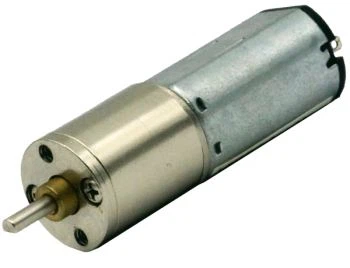
In a modern hospital, a surgical instrument faces a far more punishing environment than the operating table. Between every single procedure, it is cleaned, wrapped, and exposed to high-pressure, high-temperature sterilization. For a battery-powered orthopedic drill and its internal drive train, that journey is repeated hundreds of times over the instrument's life. The question every medical device manufacturer must answer is simple: how long will the instrument, and the gearbox at its core, survive?
Sterilization compatibility is one of the most underestimated engineering challenges in surgical instrument design. This article explores why the sterilization cycle is so demanding, what it means for gearbox construction, and how manufacturers can build instruments that remain reliable through a lifetime of disinfection.

The Sterilization Reality
Hospital sterilization protocols are designed to eliminate microorganisms without compromise. The most widely used method - autoclaving - combines high-pressure steam with temperatures that are brutal on sensitive components. Cycle after cycle, this environment attacks the instrument on every front: heat degrades materials, steam penetrates seals, and pressure stresses housings.
For a battery-powered orthopedic drill, the stakes are high. If the internal gearbox degrades after repeated sterilization, the instrument loses torque, runs noisily, or fails outright - and the hospital is left with a costly repair, a compromised procedure, or a replacement purchase. Device reliability and sterilization resistance are therefore two sides of the same coin.
Why Some Gearboxes Fail Early
Not all gearboxes are created equal when it comes to sterilization. Premature failures can usually be traced to a few root causes.
First is inadequate sealing. Steam is remarkably good at finding its way into gaps, and once moisture reaches internal components, corrosion and electrical faults follow. A gearbox that lacks a genuinely sealed construction is vulnerable from its first cycle.
Second is material selection. Gears, shafts, and housings must be chosen not only for mechanical strength but for their behavior under repeated heat and moisture. Components that oxidize, swell, or lose dimensional stability under high temperature will quickly compromise the instrument's precision.
Third is surface treatment. The finish of both internal and external components affects how the instrument handles sterilization and how it performs in the surgeon's hand. A durable, corrosion-resistant surface protects the drive train and supports a clean, hygienic appearance.
The Hollow-Shaft Advantage Meets Hygiene
Modern bone drilling increasingly relies on cannulated techniques, in which a guide pin passes through the center of the instrument. This demands a hollow-shaft gearbox, with a channel running through the drive train. A hollow design introduces a genuine engineering tension: an open channel must coexist with a sealed, sterile instrument.
Solving this tension is a hallmark of mature gearbox design. The hollow passage must guide the pin cleanly while the surrounding structure maintains a fully enclosed construction that keeps moisture and contaminants away from gears and bearings. When done well, a hollow-shaft gearbox delivers both the clinical flexibility of cannulated workflows and the hygienic integrity that infection control demands.
Designing for Repeated Sterilization
Manufacturers who succeed in this space approach the gearbox with a few clear principles.
Seal everything. A fully sealed construction is non-negotiable. Every joint, seam, and entry point must be protected against steam and moisture ingress.
Choose materials that age gracefully. The goal is components that hold their precision, their surface, and their strength through hundreds of cycles, not just the first few.
Plan for thermal tolerance. The entire drive train must be designed around the reality of high-pressure, high-temperature exposure, with margins built in for cumulative stress.
Protect the surface. Corrosion resistance is a design requirement, not an afterthought, and it applies to the parts the surgeon touches as much as the parts inside.
Extending Instrument Life and Lowering Total Cost
The commercial case for sterilization-resistant design is straightforward. Instruments that survive more cycles stay in service longer, require fewer repairs, and deliver a better return on the hospital's investment. For manufacturers, this translates into stronger brand loyalty, fewer warranty claims, and a reputation for building instruments that can be trusted for the long haul.
There is also a sustainability angle. Instruments that last longer generate less waste, reduce the need for replacement parts, and lower the environmental footprint of surgical care. As hospitals increasingly factor sustainability into purchasing decisions, durability becomes a genuine commercial advantage.
A Design Checklist for Sterilization-Ready Gearboxes
| Design Factor | Clinical Impact |
|---|---|
| Fully sealed construction | Keeps steam and contaminants out of the drive train |
| Corrosion-resistant materials | Prevents degradation over repeated cycles |
| Surface treatment quality | Supports hygiene and comfortable handling |
| Thermal tolerance margins | Maintains precision under high-temperature exposure |
| Hollow-shaft compatibility | Enables cannulated workflows without compromising sealing |
| Consistent performance over time | Keeps torque and smoothness stable across the instrument's life |
The autoclave is the true test of a surgical instrument's quality. A battery-powered orthopedic drill only earns its place in the operating room if it can be sterilized, reliably, time and again. The gearbox at its core carries much of that burden. By prioritizing sealed construction, corrosion resistance, and material durability, manufacturers can deliver instruments that surgeons trust and hospitals can keep in service for years. In surgical device design, survival of the sterilization cycle is not a nice-to-have - it is the foundation of everything else.