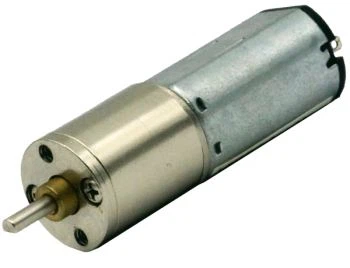
Micro DC geared motors serve as core actuation components for electronic lock, optical equipment, small robotics and multiple smart‑home hardware categories. Many international hardware companies follow a standardized workflow: send specification inquiry, evaluate sample units, validate compliance documents, and finally release volume purchase order. However numerous hidden pitfalls exist within this workflow, from sample pricing gap versus bulk quotation, connector value‑added service negotiation, cross‑regional headquarters document approval, to unexpected prototype delay caused by external supply‑chain events. A complete real‑world sourcing journey for compact DC geared motor helps B2B procurement and mechanical engineers build clearer project risk assessment framework when selecting 16mm DC Gear Motor for their electronic lock or optical‑equipment projects. This smart lock gear motor variant is widely used in locking and latching mechanisms, one of our most popular application options.

This customer represented an international hardware enterprise whose product line covers precision micro‑actuation hardware. Their annual consumption target for this drive component was projected between 4000‑5000 pieces. Their inquiry workflow started with two core requests: confirmation on interchangeable stock DC geared motor units, and feasibility assessment for custom‑tailored hardware if no stock matches their mechanical envelope. At initial communication stage, the component manufacturer provided existing stock datasheets and mechanical drawings of mature 16mm DC Gear Motor platform for customer side technical review. The customer immediately placed sample request for multiple distinct DC geared motor variants: three sample units for each candidate stock model, so their lab could run side‑by‑side performance comparison test. The customer also asked for a DC gear motor with connector to cut their internal assembly steps.
A very common commercial misunderstanding in micro‑motor sourcing lies between sample price and mass‑production unit price. In this real‑case project, sample sales price reached RMB100 per unit for small‑quantity lab samples, while 2000‑piece bulk quotation dropped sharply to roughly one‑quarter of sample unit cost. The large price gap originates from sample‑batch manufacturing characteristics: small sample orders rely on manual assembly, hand‑picked components and separate quality inspection procedure, lacking economy‑of‑scale benefits enjoyed by automated bulk production line. Procurement teams should never use sample pricing to forecast future bulk project budget. The below comparison table outlines typical commercial variables that buyers must clarify at quotation phase for DC geared motor projects. Our brushed DC gear motor series including this 16mm platform is ready for both sample testing and mass production.
| Commercial & Technical Item | Sample‑batch scenario | Mass‑production batch scenario |
|---|---|---|
| Unit pricing | High, manual‑assembly cost included | Lower, automated assembly & bulk component procurement |
| Typical lead‑time | 3‑4 weeks for standard samples | 4‑8 weeks for formal bulk order |
| MOQ constraint | Low, 3‑5 units per model acceptable | Defined volume threshold for preferential unit price |
| Value‑added service (wire & connector) | Available but higher per‑unit labor cost | Economical when integrated into mass‑production workflow |
| Compliance document support | Basic datasheet only | Sealed official spec sheet, RoHS compliance certificate |
| Additional testing item | Selective lab test for key performance | Production‑line in‑process inspection for each lot |
In this project, after initial stock sample arrangement, customer raised value‑added manufacturing requirement: bare 16mm DC Gear Motor should be pre‑assembled with lead wires plus JST‑series plastic connector. Two quotation layers emerged here: base DC geared motor unit pricing, and separate cost for wire‑soldering plus connector components. Buyers must distinguish three cost parts clearly: motor hardware itself, wiring assembly labor charge, and connector component cost. Two connector sourcing paths are available: low‑cost domestic alternative connector, or original imported connector with higher unit cost. The supplier offered separate pricing for both options. Another critical commercial detail is delivery term negotiation. Customer required goods delivered to designated warehouse in Shanghai, and supplier adjusted final unit price covering FOB Shanghai shipping condition. All these line‑items should be explicitly written into formal quotation sheet to avoid commercial dispute at later order phase. Buyers who export to Europe often prefer a RoHS certified gear motor for regulatory clearance.
Project progress encountered multiple non‑technical delays. One major disruption came from regional logistics lockdown impacting component delivery. Even though motor gearbox design did not need modification, one small mechanical end‑cover component was stuck in transit, halting prototype assembly progress. For overseas customers, such risk is often invisible at early inquiry. Customer's overseas headquarters set strict approval gate: mass‑production order can only be released after receiving two formal documents: valid RoHS 2 compliance certificate, and manufacturer‑sealed final specification sheet. Even after motor sample hardware passed domestic lab test, project still cannot move forward without completed compliance paperwork. The engineering team revised official datasheet, adding detailed environmental working parameters: working temperature range, relative humidity operating condition, insulation resistance and dielectric‑withstand voltage requirements. The motor factory also agreed adding dielectric‑withstand voltage check as in‑process production‑line inspection item for every future production batch, though standalone individual test report would not be attached for each shipment. This 6V micro geared motor configuration matched the customer's low‑voltage power supply architecture perfectly.
Motor rotation direction represented another small but high‑impact detail. Customer required motor output rotation direction adjusted to clockwise for their electronic lock mechanical mechanism, which needed formal update on sealed specification document. Small parameters like rotation direction are easy to overlook during sample communication, yet mass‑production batch error on rotation direction can generate huge rework loss for end‑product assembly line.
During sample lab testing, engineering team discovered solder detachment risk on pre‑wired samples. This demonstrated that value‑added soldering and connector assembly shall be treated as critical quality verification item, rather than regarded as simple auxiliary labor work. Buyers should include vibration test and solder‑joint reliability inside their sample validation checklist for DC geared motor with pre‑assembled harness.
For procurement and mechanical engineers sourcing 16mm DC Gear Motor for electronic lock or optical‑equipment projects, we summarize core sourcing lessons from this real‑world case. First, strictly separate sample price and bulk quotation, do not project sample‑batch cost onto volume budget. Second, split quotation clearly for base motor, wiring labor and connector hardware, confirm connector brand selection and delivery trade terms in writing. Third, build compliance document milestone into overall project timeline; hardware sample passing test does not equal project approval completion, cross‑border headquarters often requires sealed spec sheet and RoHS certification. Fourth, treat rotation direction, soldering‑joint reliability as formal validation items during sample evaluation. Following these practices will reduce commercial risk and technical rework for your DC geared motor sourcing project.