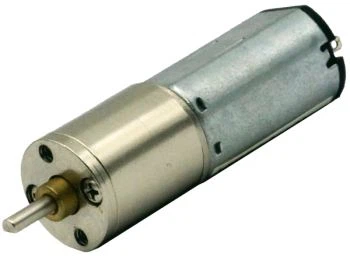

This FAQ addresses key questions about Permanent Magnet Direct Current (PMDC) gearmotors, focusing on brush maintenance, gear ratio identification, application suitability, and practical alternatives-critical for prototype development and industrial use, based on real-world engineering discussions.
1. Brushed PMDC Motor & Brush Maintenance
Q: Is the 1/4hp PMDC motor a brushed design?
A: Yes. All PMDC motors of this type use brushes for commutation; brushless motors are explicitly marked "brushless" on the nameplate. Note: Reversibility depends on brush design-only motors with radial brushes support safe forward/reverse operation.
Q: What is the brush service interval and key care tips?
A: Inspect brushes monthly in industrial settings: clean carbon dust buildup (over 2mm risks short circuits) and replace brushes when worn to 1/3 their original length, or every 2 years regardless of wear. When disassembling the motor, exercise extreme caution: the armature is strongly attracted to permanent magnets, and magnets are highly fragile-chipping creates hard-to-remove debris that jams the motor. New brushes must match the commutator's curve and run idle for 1 hour to break in.
2. Gear Reduction Ratio: Identification & Measurement
Q: Where is the gear reduction ratio labeled on gearmotors?
A: For factory-integrated motor-gearbox units, the ratio is on the main motor nameplate or a separate auxiliary plate. For separately purchased and assembled units, the gearbox has its own nameplate (ratio may also be stamped on the gearbox housing's flat surfaces, e.g., near the output shaft).
Q: How to measure the ratio if there is no marking?
A: Count the number of input shaft rotations required to turn the output shaft 1 full revolution-the input count-to-1 ratio is the actual reduction ratio. Most small gearmotors have ratios ranging from 5:1 to 100:1 (higher for high-torque applications). If the motor input shaft is hidden (no fan), separate the motor and gearbox to access the gearbox input shaft first.
3. PMDC Motor: Suitable & Unsuitable Applications
Q: When is a PMDC motor the right choice?
A: PMDC motors work best for: DC-powered equipment (e.g., mobile/vehicular gear); low-cost prototype testing (natural variable speed, small footprint, 1/4hp models support thousands of hours of continuous test runs); low-power, low-torque industrial tasks (e.g., light conveyors, basic positioning) where high maintenance is acceptable for cost savings. They also offer strong starting torque and linear speed-torque characteristics.
Q: When should a PMDC motor be avoided?
A: Steer clear for: AC-only fixed industrial setups (requires extra rectifiers/speed controllers, raising maintenance costs); high-torque heavy loads (causes excessive brush sparking and commutator wear); 24/7 operations with low-maintenance requirements (brushes are wear parts that demand frequent downtime); critical production processes (fragile magnets and high repair difficulty risk costly downtime). Worm drive-equipped PMDC motors are especially poor for high torque-an emergency stop can trap large inertial loads, breaking drive chains or gearbox housings.
4. Gear Ratio & Drive Type Selection Tips
Q: What drive type is better for high-torque applications?
A: Planetary gearboxes are the top choice for high torque-they deliver high transmission efficiency and stability, unlike worm drives (which see exponential efficiency loss and wear under heavy loads).
Q: How to choose between speed control options for prototypes and long-term use?
A: For short-term prototype testing (low cost priority): Used PMDC motors are ideal, as their inherent variable speed meets test needs and validates power requirements quickly. For long-term mass production/24/7 operation: Pair a 3-phase induction motor with a planetary gearbox and **Variable Frequency Drive (VFD)**-this setup has no brush maintenance, a wide speed control range, stable performance, and direct compatibility with industrial 3-phase AC power.
5. Old Motor Specs & Practical Troubleshooting
Q: How to find specs for old/discontinued PMDC models?
A: 1) Check the official online catalog (some very old models may be discontinued); 2) Match core nameplate parameters (HP, voltage, RPM, torque) to find equivalent modern models ( 1/4hp PMDC model 04017NK1D: 90V DC, 1750RPM, 2.7A, 9LB/IN torque, continuous duty); 3) Reference industrial surplus/used equipment websites for cross-checked specs of matching models.
Q: What are the biggest operational taboos for PMDC motors?
A: 1) Do not run at high speed with no load (accelerates brush/commutator wear); 2) Avoid exposing to heavy dust/oil without sealing (contaminants damage brushes and commutators); 3) Never over-torque/overdraw current (causes excessive sparking and winding burnout); 4) Do not force reversal on non-radial brush models (risks brush detachment and commutator burning).
6. Prototype Development: Practical Gearmotor Choices
Q: What's a cost-effective gearmotor setup for prototype testing?
A: For initial testing, purchase used PMDC gearmotors (1/4hp or 1/2hp) to test different torque/speed needs-this low-cost approach helps refine power requirements before investing in a permanent setup. Adding a 2hp 3-phase motor with planetary gearbox (400RPM output) as a test bed is also recommended to learn VFD operation, as VFD-controlled 3-phase systems are the gold standard for long-term industrial use.
Q: How to avoid common prototype drive design mistakes?
A: Never use worm drives for high-torque prototype tasks (they fail under heavy loads). Always validate power/torque needs with manual tools (e.g., arbor presses) first-this reduces the risk of overspecifying/underspecifying gearmotors and saves redesign time.