

Hey there! As a supplier of small planetary gearboxes, I often get asked about the kinematic analysis of these nifty little devices. So, I thought I'd take a deep dive into this topic and share what I know.
What's a Small Planetary Gearbox Anyway?
First off, let's quickly go over what a small planetary gearbox is. It's a type of gear system that consists of a central sun gear, multiple planet gears that revolve around the sun gear, and an outer ring gear. These components work together to transfer power and change the speed and torque of a mechanical system. Small planetary gearboxes are super useful in a bunch of applications, from robotics and automation to aerospace and automotive industries. They're compact, efficient, and can handle high torque loads, making them a popular choice for many engineers and designers.
The Basics of Kinematic Analysis
Kinematic analysis is all about studying the motion of objects without considering the forces that cause that motion. In the case of a small planetary gearbox, we're interested in things like the rotational speed, direction of rotation, and the relationship between the input and output shafts. By understanding these aspects, we can figure out how the gearbox will perform in a given application.
Let's start with the simple stuff - the gear ratios. The gear ratio is a fundamental concept in kinematic analysis. It's the ratio of the number of teeth on the input gear to the number of teeth on the output gear. In a planetary gearbox, calculating the gear ratio can be a bit more complex because of the multiple gears involved. But don't worry, I'll break it down for you.
Calculating Gear Ratios in a Planetary Gearbox
There are a few different ways to calculate the gear ratio of a planetary gearbox, depending on which gears are fixed and which are rotating. One common method is to use the formula:
$$\text{Gear Ratio} = \frac{\text{Number of Teeth on Ring Gear}}{\text{Number of Teeth on Sun Gear}} + 1$$
This formula assumes that the ring gear is fixed, and the sun gear is the input, while the planet carrier is the output. If you have a different configuration, the formula will change accordingly. For example, if the planet carrier is fixed and the sun gear is the input, and the ring gear is the output, the gear ratio formula becomes:
$$\text{Gear Ratio} = \frac{\text{Number of Teeth on Ring Gear}}{\text{Number of Teeth on Ring Gear - Number of Teeth on Sun Gear}}$$
These calculations are crucial because they tell us how much the speed and torque will change from the input to the output of the gearbox. A high gear ratio means that the output speed will be lower than the input speed, but the output torque will be higher. On the other hand, a low gear ratio results in a higher output speed and lower output torque.
Rotational Speeds and Directions
Another important aspect of kinematic analysis is understanding the rotational speeds and directions of the different gears in the planetary gearbox. The sun gear, planet gears, and ring gear all rotate at different speeds and in different directions, depending on the configuration of the gearbox.
Let's say we have a simple planetary gearbox with the sun gear as the input, the ring gear fixed, and the planet carrier as the output. The sun gear rotates in one direction, and the planet gears rotate around the sun gear while also rotating about their own axes. The direction of rotation of the planet gears is opposite to that of the sun gear. The planet carrier, which holds the planet gears, rotates in the same direction as the sun gear but at a different speed determined by the gear ratio.
If we change the configuration, for example, by making the ring gear the input and the sun gear the output, the rotational speeds and directions will change. That's why it's so important to carefully analyze the kinematics of the gearbox to ensure it meets the requirements of the application.
Applications of Kinematic Analysis
Understanding the kinematic analysis of a small planetary gearbox has many practical applications. For instance, in a robotic arm, the gearbox is used to control the movement of the arm joints. By analyzing the kinematics, engineers can determine the appropriate gear ratio and rotational speeds to achieve the desired range of motion and precision.
In the automotive industry, small planetary gearboxes are used in automatic transmissions. Kinematic analysis helps in designing transmissions that can smoothly shift between different gears, providing optimal performance and fuel efficiency.

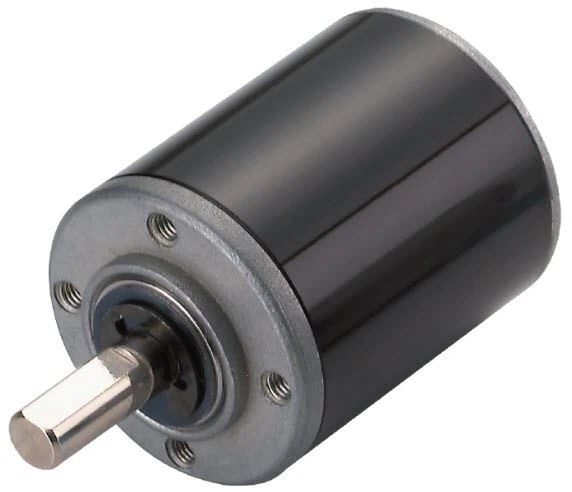
Our Small Planetary Gearbox Offerings
At our company, we offer a wide range of small planetary gearboxes to meet different customer needs. Whether you're looking for a Miniature Planetary Gearbox for a compact application or a Planetary Gear Reducer for high-torque requirements, we've got you covered. We also have the 30mm Planetary Gearbox, which is a popular choice for many applications due to its size and performance.
Our gearboxes are designed with precision and quality in mind. We use advanced manufacturing techniques and high-quality materials to ensure that our products are reliable and durable. And because we understand the importance of kinematic analysis, we can help you select the right gearbox for your specific application.
Why Choose Our Small Planetary Gearboxes?
- Customization: We can customize our gearboxes to meet your unique requirements. Whether it's a specific gear ratio, size, or mounting option, we can work with you to create the perfect solution.
- Quality Assurance: We have a strict quality control process in place to ensure that every gearbox we produce meets the highest standards. From the raw materials to the final assembly, we test and inspect every component to ensure optimal performance.
- Technical Support: Our team of experts is always available to provide technical support and assistance. Whether you have questions about kinematic analysis, installation, or maintenance, we're here to help.
Let's Talk!
If you're in the market for a small planetary gearbox, we'd love to hear from you. Our team is ready to discuss your needs, provide you with detailed product information, and help you make the right choice. Whether you're an engineer working on a new project or a business owner looking to upgrade your equipment, we can offer the solutions you need. So, don't hesitate to reach out and start the conversation about how our small planetary gearboxes can benefit your application.
References
- "Theory of Machines" by R.S. Khurmi and J.K. Gupta
- "Mechanical Engineering Design" by Joseph E. Shigley and Charles R. Mischke
- "Fundamentals of Machine Elements" by Robert C. Juvinall and Kurt M. Marshek


