

Hey there! As a supplier of small planetary gearboxes, I often get asked about how to calculate the gear ratio of these nifty little devices. So, I thought I'd put together this blog post to break it down for you in a simple, easy-to-understand way.
First off, let's talk a bit about what a small planetary gearbox is. A planetary gearbox, also known as a epicyclic gearbox, is a type of gear system that consists of one or more outer gears, or planet gears, rotating around a central gear, or sun gear. These planet gears are typically mounted on a carrier, which can rotate around the sun gear. And sometimes, there's also an outer ring gear that meshes with the planet gears.
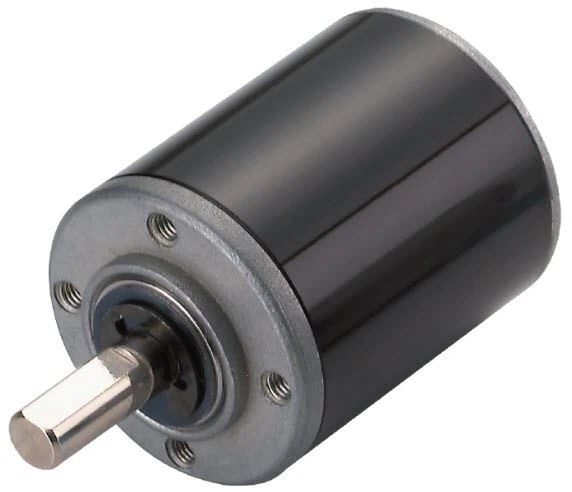
Planetary gearboxes are super popular in all sorts of applications, from robotics and automation to automotive and aerospace. They're known for their high torque density, compact size, and efficiency. And that's why we, as a supplier, focus on providing top - notch small planetary gearboxes like the 28mm Small Planetary Gearbox, Planetary Gear Reducer, and 30mm Planetary Gearbox.
Now, let's get to the main topic: calculating the gear ratio. The gear ratio of a planetary gearbox is a measure of how much the speed of the input shaft is reduced (or increased in some cases) to get the speed of the output shaft. It also tells you how much the torque is multiplied.
Basic Gear Ratio Calculation for a Single - Stage Planetary Gearbox
Let's start with a single - stage planetary gearbox. A single - stage planetary gearbox has one set of planet gears, a sun gear, and a ring gear.
The basic formula for calculating the gear ratio of a single - stage planetary gearbox is:
Gear Ratio (GR) = 1+(Number of teeth on the ring gear / Number of teeth on the sun gear)
Let's say the sun gear has 20 teeth and the ring gear has 80 teeth. Using the formula, we can calculate the gear ratio as follows:
GR = 1+(80 / 20)=1 + 4=5
What this means is that for every 5 rotations of the input shaft (usually connected to the sun gear), the output shaft (usually connected to the carrier) will make 1 rotation. And the torque at the output shaft will be 5 times the torque at the input shaft (assuming no losses).
Calculating Gear Ratio for Multi - Stage Planetary Gearboxes
Most of the time, we use multi - stage planetary gearboxes to get higher gear ratios. A multi - stage planetary gearbox is made up of two or more single - stage planetary gearboxes connected in series.
To calculate the gear ratio of a multi - stage planetary gearbox, you simply multiply the gear ratios of each individual stage.
Let's say we have a two - stage planetary gearbox. The first stage has a gear ratio of 5, and the second stage has a gear ratio of 4.

The overall gear ratio of the two - stage gearbox is:
Overall GR = GR_stage1×GR_stage2=5×4 = 20
So, for every 20 rotations of the input shaft, the output shaft will make 1 rotation. And the torque at the output shaft will be 20 times the torque at the input shaft (again, assuming no losses).
Special Cases and Considerations
Fixed Ring Gear
In some applications, the ring gear is fixed, and the sun gear is the input while the carrier is the output. This is a common configuration, and the formula we used above works well in this case.
Fixed Carrier
If the carrier is fixed, and the sun gear is the input and the ring gear is the output, the gear ratio formula changes. The gear ratio in this case is:
GR = - (Number of teeth on the ring gear / Number of teeth on the sun gear)
The negative sign indicates that the direction of rotation of the output shaft is opposite to that of the input shaft.
Efficiency
When calculating the actual performance of a planetary gearbox, we also need to consider efficiency. No gearbox is 100% efficient. There are losses due to friction, lubrication, and other factors.
The efficiency of a planetary gearbox can range from about 90% to 98%. So, when you're calculating the actual torque at the output shaft, you need to multiply the theoretical torque (based on the gear ratio) by the efficiency of the gearbox.
Why Calculating Gear Ratio is Important
Calculating the gear ratio is crucial for several reasons. First of all, it helps you choose the right gearbox for your application. If you need a high - torque, low - speed output, you'll want a gearbox with a high gear ratio.
Secondly, it allows you to optimize the performance of your system. By knowing the gear ratio, you can ensure that the motor and the load are properly matched. This can lead to better energy efficiency, longer lifespan of the components, and overall better performance of your equipment.
How We Can Help
As a supplier of small planetary gearboxes, we understand that calculating gear ratios can be a bit tricky, especially for those who are new to the world of gearboxes. That's why we're here to assist you.
We have a team of experts who can help you calculate the gear ratio based on your specific requirements. Whether you're working on a small robotics project or a large - scale industrial application, we can provide you with the right gearbox and the technical support you need.
If you're interested in our 28mm Small Planetary Gearbox, Planetary Gear Reducer, or 30mm Planetary Gearbox, or if you have any questions about gear ratio calculation or other aspects of planetary gearboxes, don't hesitate to reach out to us. We're always happy to start a conversation and see how we can help you with your project.
Conclusion
Calculating the gear ratio of a small planetary gearbox is an important part of choosing and using the right gearbox for your application. Whether it's a single - stage or multi - stage gearbox, understanding the basic formulas and special cases can make a big difference in the performance of your system.
We're here as your reliable supplier of small planetary gearboxes, ready to offer you high - quality products and expert advice. So, if you're in the market for a planetary gearbox or have any questions, get in touch with us. We look forward to working with you!
References
- Norton, Robert L. "Machine Design: An Integrated Approach." Pearson, 2012.
- Shigley, Joseph Edward, et al. "Mechanical Engineering Design." McGraw - Hill Education, 2019.


