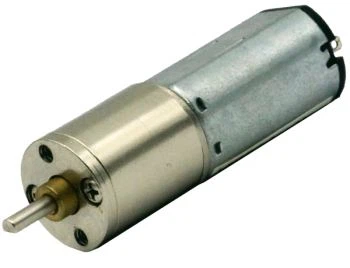
When it comes to choosing a DC gear motor for your project, one of the key decisions you'll face is whether to go for a single - stage or a multi - stage option. As a DC Gear Motor supplier, I've seen firsthand how this choice can make or break a project. In this blog, I'll share some insights to help you make an informed decision.
Understanding Single - Stage DC Gear Motors
Single - stage DC gear motors are pretty straightforward. They consist of one set of gears that transfer power from the motor to the output shaft. This simplicity is both a strength and a limitation.
One of the main advantages of single - stage motors is their cost. They're generally cheaper to produce, which means you can get them at a lower price. If you're on a tight budget for your project, a single - stage motor like our 12 Volt Gear Reduction Motor could be a great option. It offers a decent amount of torque and speed reduction in a cost - effective package.
Another plus is their efficiency. With fewer gears, there's less friction and energy loss. They can convert a higher percentage of the electrical energy into mechanical output. This makes them ideal for applications where energy efficiency is crucial, like small battery - powered devices.
But single - stage motors do have their drawbacks. They can only provide a limited amount of gear reduction. If you need a high reduction ratio, a single - stage motor probably won't cut it. For instance, if you're building a robot that requires slow and powerful movement, a single - stage motor might not be able to generate enough torque at a low enough speed.
The Lowdown on Multi - Stage DC Gear Motors
Multi - stage DC gear motors, on the other hand, have multiple sets of gears in a series. Each stage adds to the overall gear reduction, allowing for much higher reduction ratios.
The biggest advantage of multi - stage motors is the high torque output. They can handle heavy loads and provide slow, precise movement. This makes them a great choice for industrial applications, like conveyor belts or automated machinery. Our Micro DC Gear Motor is a multi - stage motor that's suitable for certain high - torque, micro - scale applications.
Multi - stage motors also offer more flexibility in terms of speed and torque customization. You can adjust the number of stages and the gear ratios in each stage to meet your specific requirements.
However, multi - stage motors come with some downsides. They're more complex and expensive to manufacture. This means they'll cost you more upfront. Additionally, the increased number of gears leads to more friction and energy loss. So, they're generally less energy - efficient than single - stage motors.
Factors to Consider When Making a Choice
1. Torque Requirements
The first thing you need to think about is how much torque your application needs. If you're working on a project that doesn't require a lot of force, like a small fan or a light - duty toy, a single - stage motor might be sufficient. But if you're dealing with heavy loads or need to overcome a lot of resistance, a multi - stage motor is the way to go.
2. Speed Requirements
The desired speed of your application is also crucial. Single - stage motors are better for applications where a relatively high speed is required. They can provide a good balance between speed and torque at moderate reduction ratios. If you need a very slow speed, multi - stage motors are more suitable as they can achieve high reduction ratios.


3. Budget
Let's face it, money matters. If cost is a significant factor in your decision - making process, single - stage motors are usually the more affordable option. But if you can't compromise on performance and need high torque and precise speed control, investing in a multi - stage motor might be worth it in the long run.
4. Space Constraints
The physical space available for the motor is another consideration. Single - stage motors are generally more compact because they have fewer components. If you're working on a project with limited space, like a Small Geared Motor for a miniature device, a single - stage motor could be a better fit. Multi - stage motors, with their additional gears, tend to be larger.
5. Efficiency
If energy efficiency is a priority, like in battery - powered or environmentally - friendly applications, single - stage motors are preferable. Their lower friction and energy loss make them more efficient in converting electrical energy into mechanical work. However, if you can tolerate some energy loss in exchange for higher torque and performance, a multi - stage motor is acceptable.
Applications of Single - Stage and Multi - Stage DC Gear Motors
Single - Stage DC Gear Motor Applications
- Consumer Electronics: Single - stage motors are commonly used in small electronic devices such as portable fans, adjustable mirrors in cars, and window blinds. These applications don't require high torque, and the cost - effectiveness and efficiency of single - stage motors make them a natural choice. For example, our 3V Mini Gear Motor is perfect for small, battery - powered consumer electronics.
- Light - Duty Toys: Toys that require simple movement, like toy cars or small robotic toys, can benefit from single - stage motors. They provide enough power to make the toys functional without adding too much cost.
Multi - Stage DC Gear Motor Applications
- Industrial Equipment: In the industrial sector, multi - stage motors are used in conveyor systems, packaging machines, and automated assembly lines. These applications demand high torque and precise speed control, which multi - stage motors can provide.
- Medical Devices: Some medical devices, such as infusion pumps and surgical robots, rely on multi - stage motors for their high precision and ability to handle delicate tasks. Our Micro Gear Motor can be used in these types of applications due to its small size and high - performance capabilities.
Making the Final Decision
After considering all these factors, you should have a clearer idea of whether a single - stage or multi - stage DC gear motor is right for your project. Remember, there's no one - size - fits - all answer. Each application has its unique requirements, and you need to weigh the pros and cons of each type of motor.
If you're still unsure, don't hesitate to get in touch with us. As a DC Gear Motor supplier, we have a team of experts who can help you analyze your needs and recommend the most suitable motor for your project. We offer a wide range of single - stage and multi - stage DC gear motors, and we're always ready to support you in your procurement process. Whether you're working on a small DIY project or a large - scale industrial application, we've got the motors you need. Contact us today to start discussing your requirements and let's find the perfect motor solution together.
References
- Some basic knowledge about DC gear motors from industry textbooks.
- Practical experience and case studies in the DC gear motor supply business.